
The bill that repeats is the one that breaks
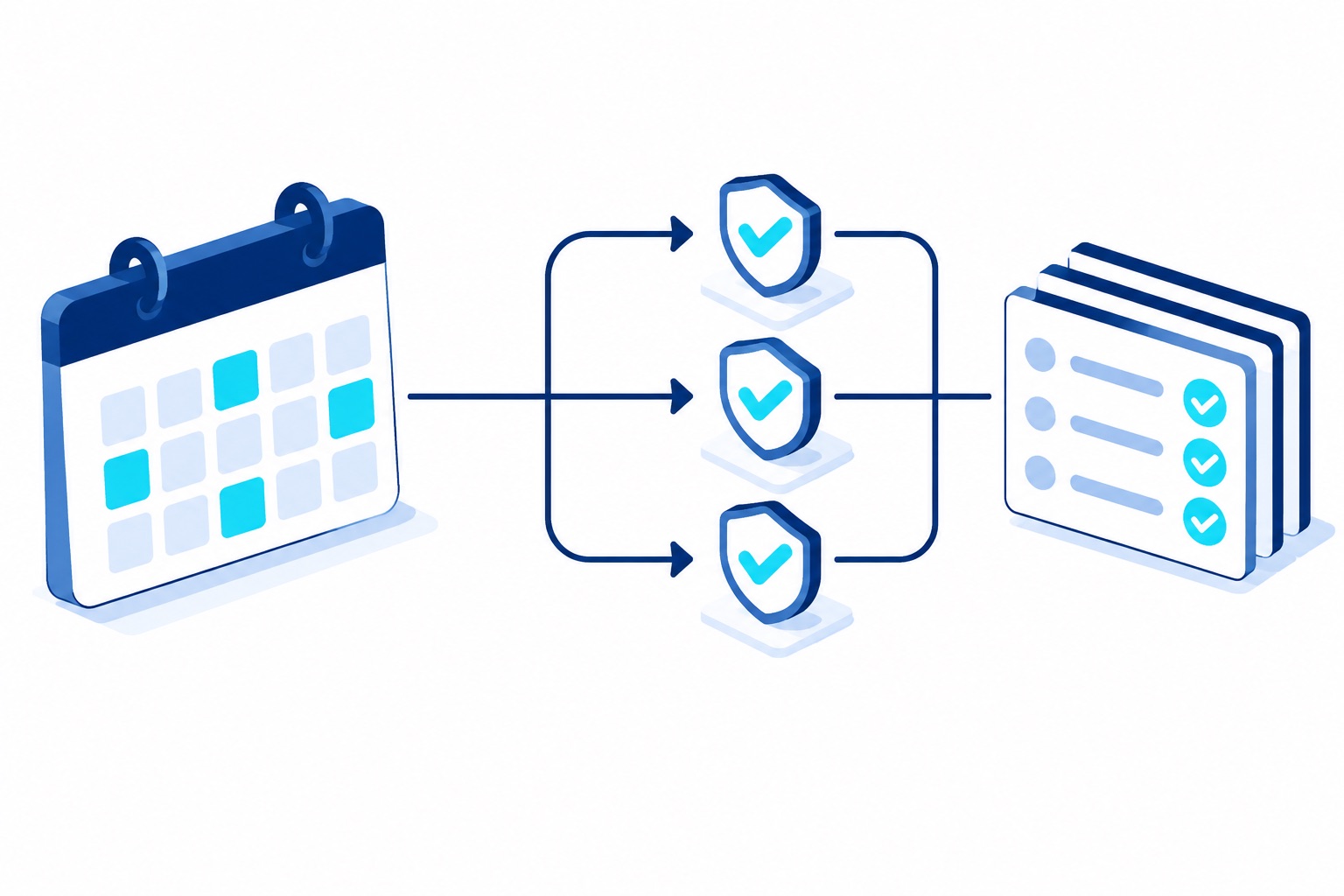
Ask a finance team which payments cause the most work, and nobody says the one-off vendor invoice. It is the rent that lands on the 1st, the logistics invoice that arrives weekly with a different amount, the three SaaS subscriptions billed in dollars on the same card, the retainer that has to clear before a Friday. Recurring bills are small individually and relentless collectively. They are also where most "bill pay" implementations quietly fall apart around month three.
That is not a product quality problem so much as a definition problem. Two platforms can both claim to handle bill pay while doing completely different things with your money, your approvals and your ERP. This guide is about telling them apart before you sign, using the parts of the workflow that only show up once the novelty wears off.
What "bill pay" actually covers
Under the label there are four distinct jobs, and platforms usually own two or three of them well:
- Capture and coding — getting the invoice in, reading it, matching it to a PO or contract, and assigning a general ledger code.
- Approval — routing by amount, cost centre, legal entity and sometimes by bank-detail change status.
- Funding and settlement — deciding where the money comes from (prefunded balance, draw on a line, direct debit from your bank), when it leaves, and by which rail.
- Reconciliation and evidence — remittance data, ledger entries, and the audit trail that survives a query nine months later.
A platform that is strong on capture and weak on funding will feel excellent in the demo and painful in the first close. Ask which of the four the vendor owns versus integrates, and write the answer down.
Five tests that separate platforms
1. Does it understand a schedule, or only an invoice? A recurring bill is not a template. Amounts drift, dates shift around holidays, and occasionally a month is skipped. Test with a real example: a weekly carrier invoice that varies by 30% and lands two days late twice a quarter. If the platform cannot express tolerance rules and auto-hold outside them, your team becomes the tolerance rule.
2. Can approval routing survive an org chart? Most platforms route by amount. Fewer handle entity plus cost centre plus project, with delegation when someone is on leave and escalation when nobody responds. The distinction matters the first time an approver resigns. The approval workflow design guide covers the control matrix in detail.
3. Where does the money sit before it moves? Prefunded models require you to park cash at the provider, which is a treasury decision, not an AP decision. Draw-down models keep funds in your account until the cut-off but require a mandate or a line. Direct debit models are simplest and slowest. Each changes your working capital and your counterparty exposure, and none of them is visible in the pricing sheet.
4. Which direction does the ERP sync run, and which fields survive? "Integrates with NetSuite" can mean a nightly CSV or a bi-directional sync of vendors, invoices, payments and GL postings. Ask specifically how a new supplier created in the bill pay tool becomes a vendor record, and what happens when someone edits a bank account in one system and not the other. The ERP integration guide covers the mapping traps.
5. Can it choose a rail per bill, with a fallback? A domestic rent payment and an overseas retainer should not travel the same way. Look for per-payment rail selection (ACH, SEPA, local scheme, wire, virtual card) and a documented fallback when the preferred rail fails. Platforms that route everything through one corridor are cheap until that corridor has an outage.
What each pricing model hides
| Pricing model | Looks like | What it hides |
|---|---|---|
| Per payment | Simple, predictable at low volume | Cost explodes with volume; recurring bills are exactly high volume |
| SaaS seats | Flat, easy to budget | Payment fees and FX spread are billed separately |
| FX spread | "No fees on transfers" | The margin sits in the rate; 40–80 bps is invisible unless you benchmark |
| Float / prefunding | Zero transaction cost | You fund the provider's balance sheet with your working capital |
| Card rebate share | Cashback looks like free money | Supplier acceptance, surcharging and reconciliation complexity |
The honest comparison is cost per successfully reconciled payment, not cost per transaction. That number requires adding fees, FX margin, funding cost and the internal hours spent chasing exceptions. The supplier payment cost model is a reasonable way to force the calculation.
The problems that appear in month three
Duplicate payments from retries. A payment times out, the platform retries, and both settle. Good platforms use idempotency keys and expose a payment state machine you can query; weak ones ask your team to check the bank manually. Test this before go-live by asking what happens when the bank returns a timeout.
Approval bypass through scheduling. Someone sets a recurring schedule after approval, then changes the amount. If the platform does not re-trigger approval on material change, your control has a hole that no one will notice until audit.
FX variance nobody owns. The rate quoted at approval is not the rate at settlement. Either the platform locks the rate for a window and states it, or finance absorbs variance every month. Ask which, and who eats the difference.
Reconciliation that stops at "paid". The ledger entry needs the supplier, invoice reference, amount, currency, fee and settlement date. If the platform only returns a payment ID, your team rebuilds the rest in a spreadsheet — which is the exact work the platform was bought to remove.
A realistic implementation timeline
Vendors quote four to six weeks. The teams that hit that number usually do three things: they map fields before configuring, they pilot with one entity and one bill type, and they keep the old process alive in parallel for one full cycle.
Weeks one and two are mapping — supplier master, GL codes, approval matrix, entity structure, cut-off times. Weeks three and four are the pilot: one recurring bill category, low value, high frequency, with a named owner on both sides. Weeks five to eight are rollout by entity, not by feature. Anything faster usually means the mapping was skipped, and the mapping is where the month-three problems are born.
Questions for the reference call, not the sales call
Vendors choose their references. Ask these five anyway, and listen for hesitation:
- How many recurring schedules are you running, and what share fail on the first attempt?
- What did your last ERP change break, and how long did it take to fix?
- Who reconciles exceptions — your team or ours?
- Show me a payment that was held and released. What did the audit trail look like?
- If we leave, in what format do we get our supplier and payment history?
The answers separate platforms that sell bill pay from platforms that run it. For a mid-market company paying 300 to 3,000 bills a month, the difference is roughly one full-time analyst — which is usually the business case in the first place. If you need to build that case for a CFO, the AP automation ROI model is the place to start.