
Payment terms for international suppliers should balance supplier trust, buyer cash flow, and payment certainty. The right setup is rarely a single number of days: it combines the commercial term (for example, Net 30), the payment milestone, the currency, the method, and a documented process for disputes or delivery exceptions.
For most established supplier relationships, start with a clear invoice due date, a method that gives both parties payment visibility, and a staged approach for higher-risk or first orders. This guide explains how finance and procurement teams can choose terms that keep international supply moving without creating unnecessary working-capital pressure. Where buyers need longer terms without straining cash flow, B2B BNPL and digital trade credit is an alternative to renegotiating Net terms.
Quick rule of thumb: use Net 30 for routine repeat orders, Net 60 for larger or seasonal buys, and Net 90 or staged milestones for first orders or custom production. On first or high-value orders, escrow for international B2B payments can protect both sides. Pair every term with a defined payment method — see how to pay overseas suppliers.
What Are International Supplier Payment Terms?
International supplier payment terms define when a buyer pays, what event triggers payment, and how value is transferred across borders. A complete term should state the due date, currency, invoice and acceptance requirements, bank or payment instructions, and the treatment of fees, FX, tax, refunds, and disputes — including the cross-border B2B payment taxes (VAT, GST & withholding) that decide who ultimately bears them.
“Net 30” alone is incomplete for a cross-border transaction. Finance teams also need to establish whether the countdown begins on invoice date, shipment date, goods receipt, or acceptance; whether intermediary bank fees are included; and which party absorbs an unexpected FX move.
Choose Terms by Relationship Risk, Not Habit
| Supplier Situation | Practical Term | Control to Add |
|---|---|---|
| New supplier or first order | Deposit plus balance after defined proof of shipment or acceptance | Independent bank-detail verification and a documented approval threshold |
| Proven recurring supplier | Net 30 or Net 45 from an unambiguous invoice or receipt date | Three-way match: purchase order, receipt, and invoice |
| Large, custom, or long-lead-time order | Milestones tied to production, inspection, shipment, and acceptance | Written evidence required at each milestone |
| Volatile currency corridor | Shorter payment window or agreed FX reference and tolerance | Track the all-in FX cost separately from the invoice amount |
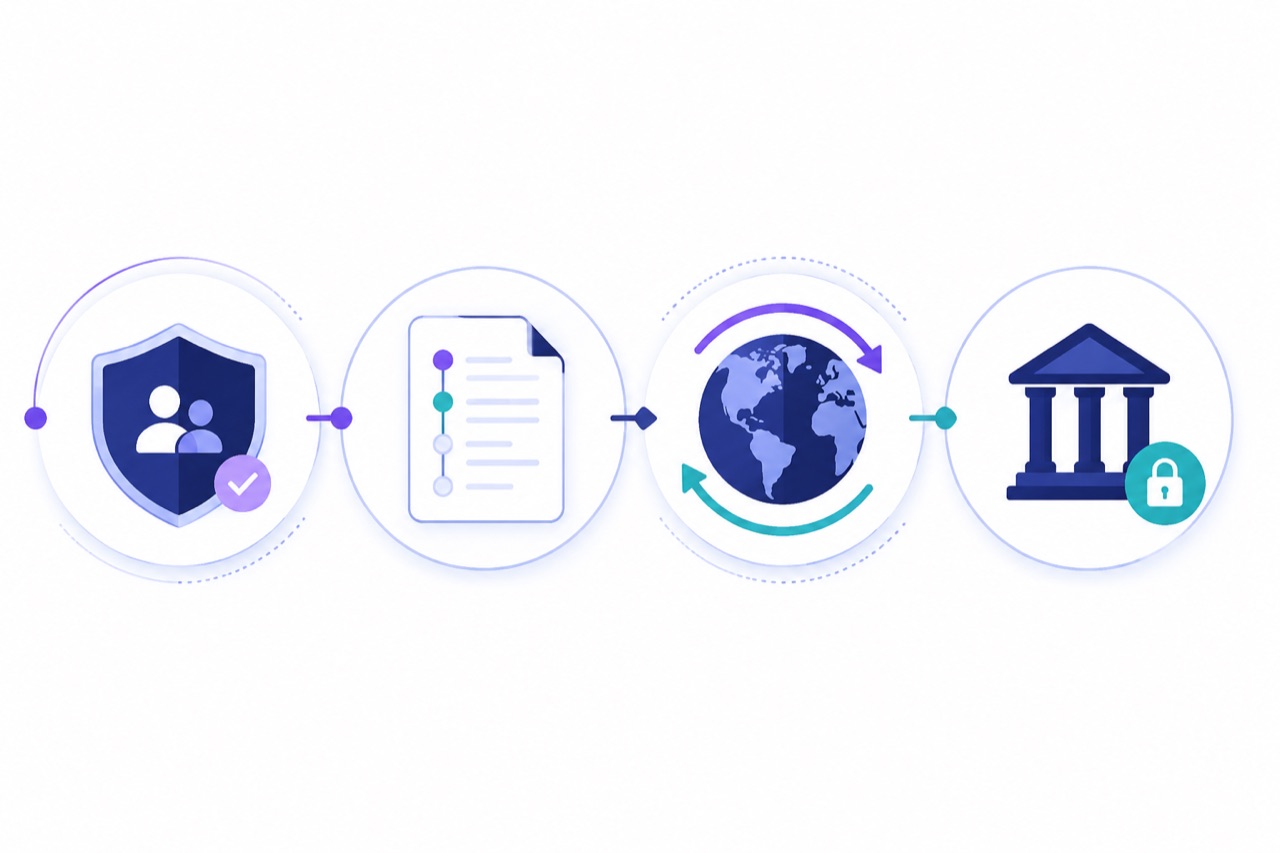
The Four Payment-Term Components That Need to Be Explicit
1. The payment clock
Define the trigger in operational language: “Net 30 from accepted invoice” or “30 calendar days after goods receipt.” Avoid a generic “Net 30” when the buyer and supplier may record shipment, receipt, or invoice acceptance on different days.
2. Currency and FX responsibility
State the invoice currency and who bears conversion and intermediary costs. The cheapest-looking payment method can be expensive once FX spread, correspondent charges, and reconciliation work are counted. Teams managing regular foreign-currency exposure should align terms with a documented FX risk policy.
3. Payment method and evidence
Choose a route that gives the supplier a predictable receipt experience and gives the buyer a payment reference that can be reconciled. A payment confirmation is not always proof that the supplier has received cleared funds. Build the expected settlement time and proof requirement into the agreement. Then make sure the ledger can close on those same references: payment to ledger covers the posting and reconciliation side.
4. Exceptions and disputes
Specify who can place an invoice on hold, how a partial delivery is handled, and who approves payment-detail changes. This is not paperwork for its own sake: a clear exception workflow reduces duplicate payments, late fees, and business-email-compromise exposure.
How Payment Terms Affect Working Capital
Longer terms can preserve buyer cash, but they may raise supplier prices, reduce priority in constrained supply, or prompt a supplier to request a deposit. Shorter terms can earn an early-payment discount or protect capacity, but only when the discount is greater than the buyer’s cost of capital and operational effort.
Evaluate the full trade-off: inventory days, expected settlement time, FX exposure, supplier reliability, and the cost of a missed delivery. Faster rails can improve visibility, but they should sit behind approval controls rather than replace them. See how real-time cross-border rails affect supplier payments for the operational considerations.
A Five-Step Process for Setting International Supplier Terms
- Segment suppliers by risk and criticality. Do not give a new, high-value supplier the same terms as a proven low-risk vendor.
- Map the real payment path. Confirm currencies, funding account, payment rail, expected settlement, and fee allocation before negotiation.
- Write one trigger for each milestone. Make invoice acceptance, inspection, shipment, or receipt independently auditable.
- Design the approval and bank-change controls. Separate invoice approval from release of funds, and verify bank changes outside email.
- Review terms quarterly. Compare actual delivery, payment timing, exceptions, FX cost, and dispute rate against the original assumption.
Common Mistakes to Avoid
- Treating a due date as the entire payment term.
- Comparing payment fees without comparing FX spread and failed-payment costs.
- Allowing supplier bank-detail changes on an emailed instruction alone.
- Using accelerated payment as a substitute for invoice and compliance controls.
- Failing to align procurement, treasury, and accounts payable on the same terms.
Conclusion: Good Terms Make International Payments Predictable
The best international supplier payment terms make timing, cost, ownership, and evidence predictable before an invoice arrives. Start with the relationship risk and operating reality, then choose terms and rails that make both payment execution and reconciliation simpler.
📚 Related Articles
Frequently Asked Questions
What payment terms are typical for international suppliers?
Established relationships often use Net 30 or Net 45, while new, custom, or higher-risk orders may use deposits and milestone payments. The suitable term depends on relationship history, order value, currency risk, and the evidence available for delivery.
Who pays cross-border transfer and FX fees?
The agreement should state this explicitly. A buyer may pay all fees, share them, or require the supplier to receive a fixed net amount. The key is to document the invoice currency, fee allocation, and FX reference clearly.
How can teams reduce fraud in supplier payments?
Use independent verification for bank-detail changes, separate approval from payment release, match invoices to purchase and receipt records, and apply payment limits based on supplier risk.